Where Valpolicella is
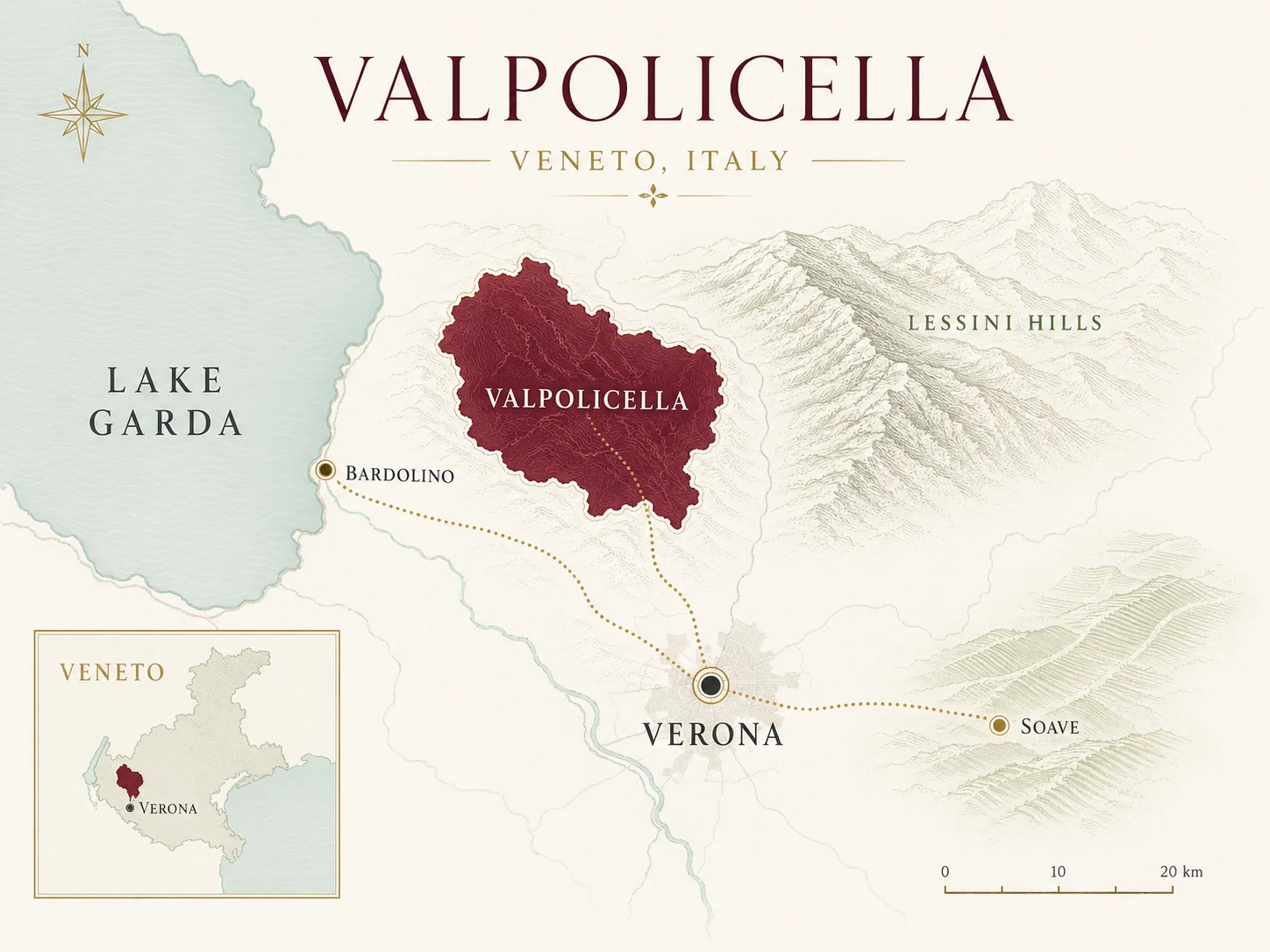
Valpolicella sits in the hills north and northwest of Verona. For travelers, this is one of Veneto's easiest wine regions to combine with a city stay because many cellar visits, villages, and scenic routes are close to Verona.
The area is often discussed in three useful ways: the historic Classico zone, the Valpantena valley, and the wider Valpolicella area. Those terms help you read labels and plan visits, but they do not replace producer quality.
Why the region matters
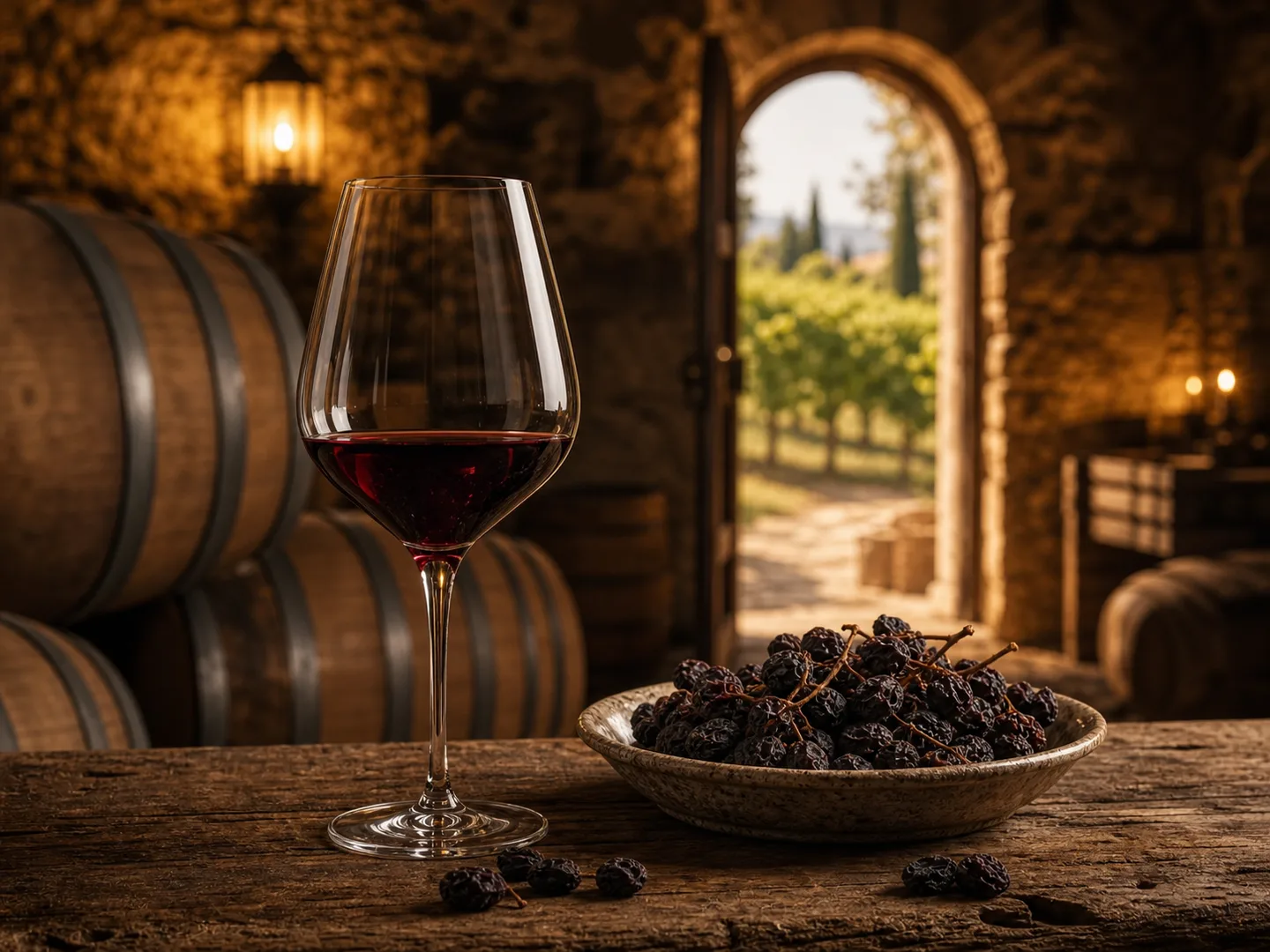
Few Italian wine areas show such a wide range from the same broad family of grapes. A light Valpolicella can be fresh and cherry-driven, while Amarone is made from dried grapes and can be full-bodied, structured, and long-lived.
Valpolicella also explains one of Veneto's most important ideas: the same territory can produce everyday table reds, richer dinner wines, dry appassimento reds, and sweet dried-grape wines.
Main grapes
Corvina and Corvinone are central names, with Rondinella also important. Other permitted red grapes may appear in smaller proportions depending on the wine and producer.
In simple terms, Corvina and Corvinone are often associated with cherry fruit, perfume, and structure, while Rondinella is valued for reliability and blending support. Final character still depends on vineyard site, drying, fermentation, aging, and producer style.
Main wines produced
| Wine | What to expect |
|---|---|
| Valpolicella DOC | Fresh, dry red wine with cherry fruit and easy food flexibility. |
| Valpolicella Ripasso DOC | Fuller and richer than basic Valpolicella, often with dried-cherry and spice notes. |
| Amarone della Valpolicella DOCG | Dry, powerful red made from dried grapes. |
| Recioto della Valpolicella DOCG | Traditional sweet red wine, also made with dried grapes. |
Classico, Valpantena, and wider Valpolicella
Valpolicella Classico refers to the historic western zone. Valpantena is another important named area. These terms can help when comparing labels or planning visits, but producer style and balance still matter.
The Classico zone is useful for travelers because it includes well-known valley names and many established wineries. Valpantena runs north of Verona and is often convenient for visitors who want a wine route close to the city. The wider Valpolicella area adds more producers and styles, so it should not be dismissed automatically.
Towns and villages worth visiting
If you are planning a day in Valpolicella, it helps to think in terms of a few towns and villages rather than the region as one blur of vineyards. These are some of the most useful places to know:
- Sant'Ambrogio di Valpolicella: a practical gateway into the region, known for wineries, villas, churches, and easy access from both Verona and the Lake Garda side.
- San Giorgio di Valpolicella: one of the prettiest stops in the area, with a panoramic terrace and a village setting recognized among Italy's most beautiful small towns.
- Fumane: a strong choice if you want wine plus nature and history, with the Fumane valley, Molina Waterfall Park, and easy access to Villa Della Torre.
- San Pietro in Cariano: useful for travelers who want a central base in Valpolicella Classica, with historic villas, Roman traces, and several winery routes close by.
- Negrar di Valpolicella: one of the key wine towns in the eastern part of the Classico area, surrounded by vineyard-covered hills and convenient for cellar visits.
- Marano di Valpolicella: a good pick for a quieter, more landscape-driven side of Valpolicella, especially if you want preserved traditional scenery rather than only major winery names.
For many visitors, the easiest plan is to base in Verona, choose one valley, and combine two or three stops such as a winery, a lunch stop, and one scenic town or viewpoint instead of trying to cover everything in one day. If you want the city side of that plan, see Verona for Wine Travelers.
Food and travel notes
Fresh Valpolicella works well with salumi, pasta, roast chicken, and casual dishes. Ripasso and Amarone suit richer meals such as braised meats, mushrooms, aged cheese, and winter cooking.
As a travel area, Valpolicella pairs naturally with Verona, hillside restaurants, cellar visits, and scenic drives through villages and vineyards.
Why it works for visitors
Valpolicella is not only about buying a famous bottle. It works well on the ground because the region gives you a few different kinds of wine day: polished Amarone estates, relaxed lunch-and-tasting stops, villa visits, museum-style cellars, and easy routes that still leave time for Verona.
If you only have one day, it usually makes more sense to choose two or three well-matched stops instead of trying to cover the whole region. A balanced day often means one historic winery, one food-focused stop, and one tasting that helps you understand the difference between Valpolicella, Ripasso, and Amarone.
Good first steps
If you are new to the region, taste the wines in order from lighter to richer: Valpolicella DOC, Valpolicella Ripasso, Amarone, and then Recioto. That sequence makes the grape family and the appassimento tradition much easier to understand.
For wine-style details, read the Amarone and Valpolicella guide.
Best for first-time visitors
Base yourself in Verona, start with a winery that explains the region clearly, then follow with either a lunch-oriented stop or a more historic Amarone cellar.
Go from region to wineries
Once you understand the wines, the next practical step is choosing which estates are actually worth visiting for your style of day.