Red wine guide
Amarone vs Valpolicella Ripasso: Which One Should You Buy?
Amarone is the famous special bottle. Ripasso is often the smarter dinner bottle. The best choice depends on the meal, the mood, and how much weight you want in the glass.
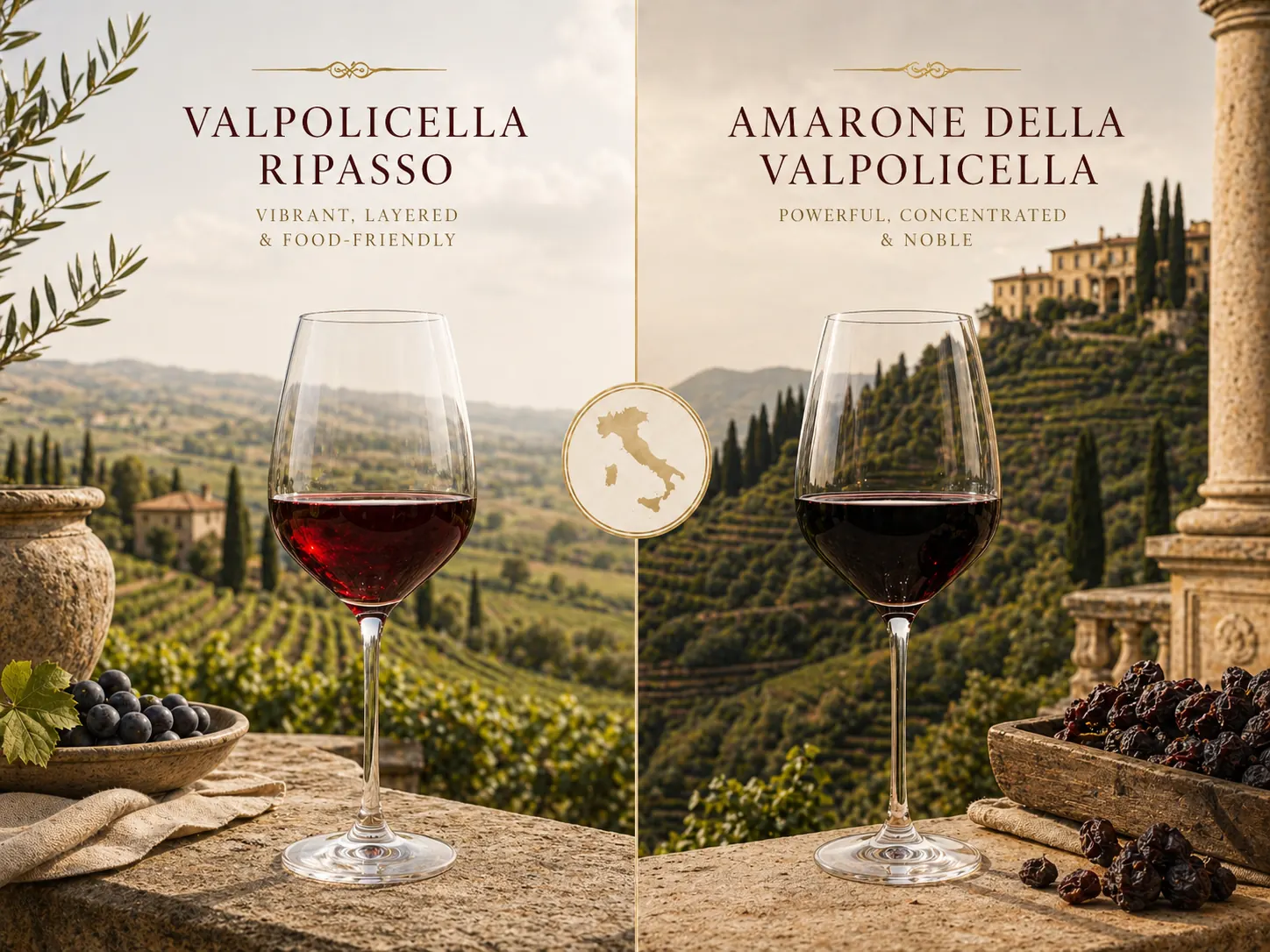
Both wines come from the Valpolicella world near Verona. Both can show dark cherry, spice, and a sense of richness. But they are not interchangeable. Amarone is built around dried grapes and concentration. Ripasso is usually a more approachable red that borrows some richness without becoming as intense.
The short comparison
| Wine | Best for | General style |
|---|---|---|
| Amarone della Valpolicella | Special meals, gifts, rich winter dishes, cellaring | Dry, powerful, concentrated, often high in alcohol |
| Valpolicella Ripasso | Dinner, roast meats, mushrooms, pasta, better everyday value | Fuller than basic Valpolicella, usually less intense than Amarone |
What makes Amarone different?
Amarone della Valpolicella is made from grapes that are dried before fermentation. This appassimento process concentrates flavor, texture, and alcohol potential. The result is usually a dry red wine with a rich profile: dark cherry, dried fruit, spice, cocoa, tobacco, and a warming structure.
Good Amarone should not taste simply hot or heavy. The best examples have enough freshness and balance to carry the richness.
What makes Ripasso different?
Valpolicella Ripasso is often described as sitting between basic Valpolicella and Amarone. It is fuller and deeper than a simple young Valpolicella, but it is usually less powerful, less expensive, and easier to drink than Amarone.
That makes Ripasso useful. It can bring some dried-cherry and spice character without demanding a heavy meal or a special occasion.
Choose Amarone when
- The food is rich, such as braised beef, game, aged cheese, mushroom dishes, or winter risotto.
- You want a gift bottle or a wine that feels like part of the occasion.
- You are comfortable with fuller-bodied, higher-alcohol reds.
- You plan to give the wine attention rather than serve it as background.
Choose Ripasso when
- You want a red for dinner rather than a statement bottle.
- The meal is flavorful but not huge.
- You like richness but do not want Amarone's size.
- You want better value in the Valpolicella family.
Serving tips
Serve both wines slightly cooler than a warm room. This matters especially for Amarone, where too much warmth can make alcohol feel louder. A younger Amarone may benefit from decanting. Ripasso usually needs less ceremony.
Food pairing examples
Amarone works best with serious food: braised beef, aged Monte Veronese-style cheese, game, mushroom dishes, and rich winter plates. Ripasso is more flexible with roast meats, pasta with meat sauce, grilled vegetables, charcuterie, and mushroom risotto.
The practical rule
If the meal is casual, Ripasso may be better. If the meal is special, rich, and slow, Amarone can be worth it. Buying the bigger wine is not always the better choice. Buying the right wine for the table is.
Read next
Read the full Amarone and Valpolicella guide, see featured Veneto wine styles, or explore Verona wine travel.