
Where the Prosecco hills are
The best-known Prosecco hills lie north of Treviso, between Conegliano and Valdobbiadene. Asolo sits farther west in another hilly area of Veneto. These areas are distinct from the broader Prosecco DOC production zone, which also extends into Friuli Venezia Giulia.
Conegliano and Valdobbiadene give the main historic frame: Conegliano is associated with wine education and production knowledge, while Valdobbiadene is closely tied to the steep vineyard landscape and many of the most famous hillside names.
Why the region matters
For many drinkers, Prosecco means a simple sparkling wine. The hills add more context: steeper vineyards, village names, DOCG identity, and wines that often show more detail than broad everyday bottles.
This does not mean every DOCG bottle is automatically better for every taste. It means the label can tell you more about place, hillside origin, and style than a broad Prosecco DOC label usually does.
Main grape
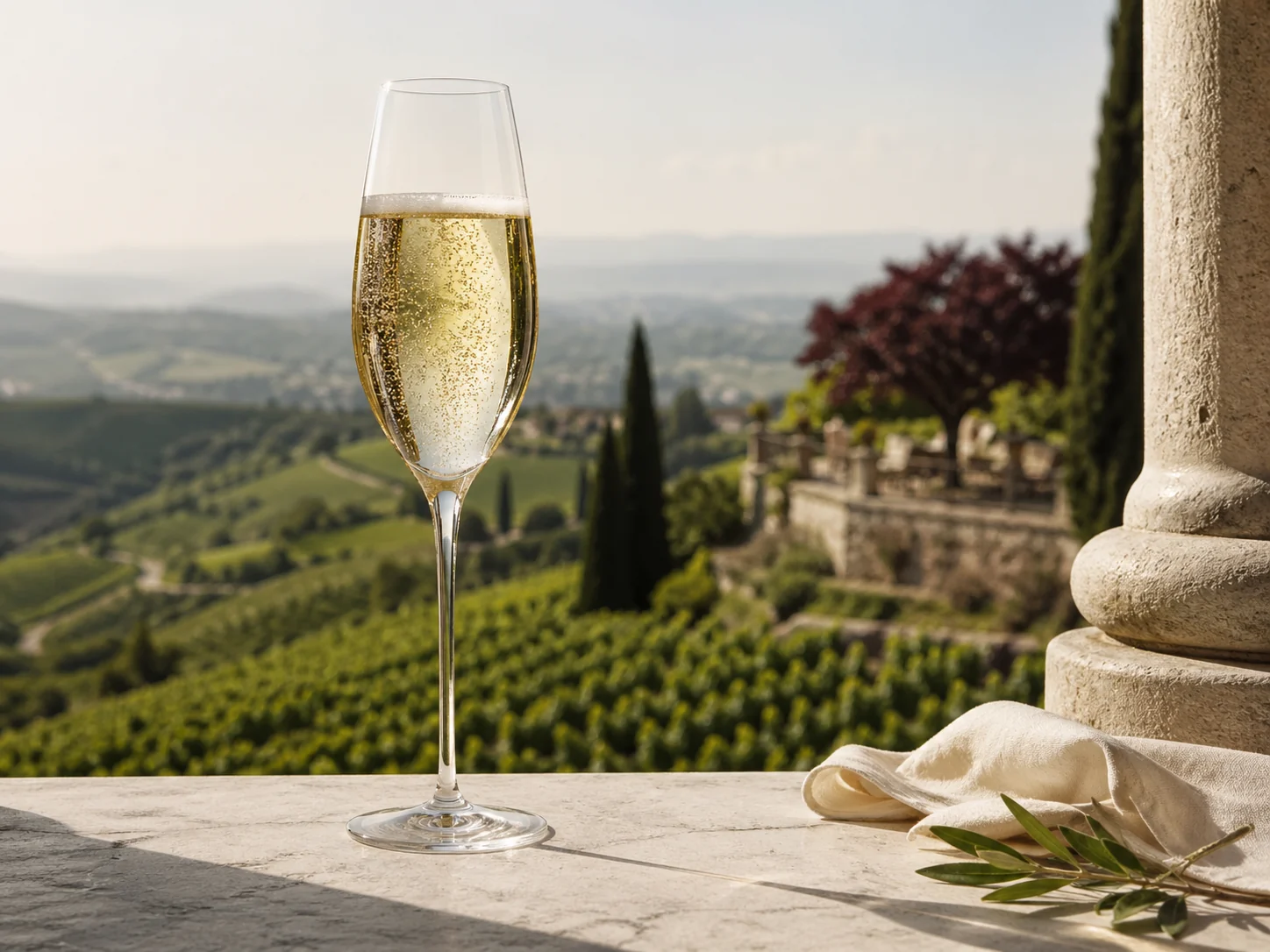
Glera is the main grape behind Prosecco. It typically gives apple, pear, citrus, white flowers, and a fresh, easy-drinking profile.
Main wines produced
| Wine | What to expect |
|---|---|
| Conegliano Valdobbiadene Prosecco Superiore DOCG | Specific hillside Prosecco from the historic area between Conegliano and Valdobbiadene. |
| Asolo Prosecco DOCG | A smaller Veneto DOCG area for more specific hillside Prosecco. |
| Cartizze | A small, famous subzone within Conegliano Valdobbiadene. Important, but producer balance still matters. |
| Rive | Wines from named steep slopes or village areas within Conegliano Valdobbiadene, useful for seeing more local detail. |
Sweetness and style
Extra Brut and Brut are usually the first places to look if you prefer a drier taste. Extra Dry is softer despite the name, and Dry can taste rounder again. The sweetness term matters just as much as the DOC or DOCG category.
Food and travel notes
Prosecco works well with cicchetti, seafood, prosciutto, fried starters, light pasta, and aperitivo snacks. The hills are useful for travelers who want scenery, cellar visits, and a wine day between Venice, Treviso, and the Dolomites.
For travel planning, the Prosecco hills are better treated as a landscape than a single stop. Small villages, winding roads, vineyard viewpoints, and cellar visits are part of the appeal.
For label and sweetness details, read the Prosecco guide.