
Why Verona matters
Verona is not only a stop for Romeo and Juliet photos. It is one of the most useful travel hubs in this part of Italy, especially for people who want wine without giving up a real city. From here, Valpolicella sits close to the north and northwest, Soave works well to the east, and Lake Garda is an easy direction for a different kind of day.
That makes Verona ideal for travelers who want to sleep in a beautiful city, walk to dinner at night, and still reach winery areas without turning the trip into a complicated logistics exercise.
A short history of Verona
Verona's historic importance is not a marketing line. UNESCO describes the city as founded in the first century BCE, later flourishing under the Scaliger family in the thirteenth and fourteenth centuries and then under the Republic of Venice. That layered history is still visible in the city today, from Roman remains to medieval buildings, fortified walls, bridges, churches, and palaces.
For visitors, that matters because Verona does not feel like a city with one monument and a lot of filler. The place has real depth. You can move from the Roman Arena to piazzas, churches, bridges, and river views without leaving the historic center.
Main sights worth knowing
- Arena di Verona: the city's best-known monument, a Roman amphitheatre in Piazza Bra and still one of Verona's major cultural symbols. Even if you are not coming for opera, it gives the city immediate weight and helps explain why Verona feels older and more monumental than many travelers expect.
- Piazza Bra: the broad square around the Arena, useful as an easy orientation point when you first arrive in the center. It is one of the places where Verona feels open and grand rather than cramped.
- Piazza delle Erbe: one of the most atmospheric parts of Verona, surrounded by historic buildings and long tied to the city's market life. If you want the lively, walkable, layered side of Verona, this is one of the core stops.
- Juliet's House: yes, it is touristy, but it remains one of the city's most famous stops and many visitors still want to see it once. The important thing is to think of it as one stop in a bigger historic city rather than the whole reason to come.
- Ponte Pietra: the stone bridge over the Adige, one of the most iconic river views in Verona and one of the places that really makes the city memorable. This is one of the best spots for understanding the river setting of the city.
- Castelvecchio and its bridge: a strong stop if you want a more fortified and military side of Verona rather than only the romantic postcard version. It helps show the defensive and strategic history that was part of Verona for centuries.
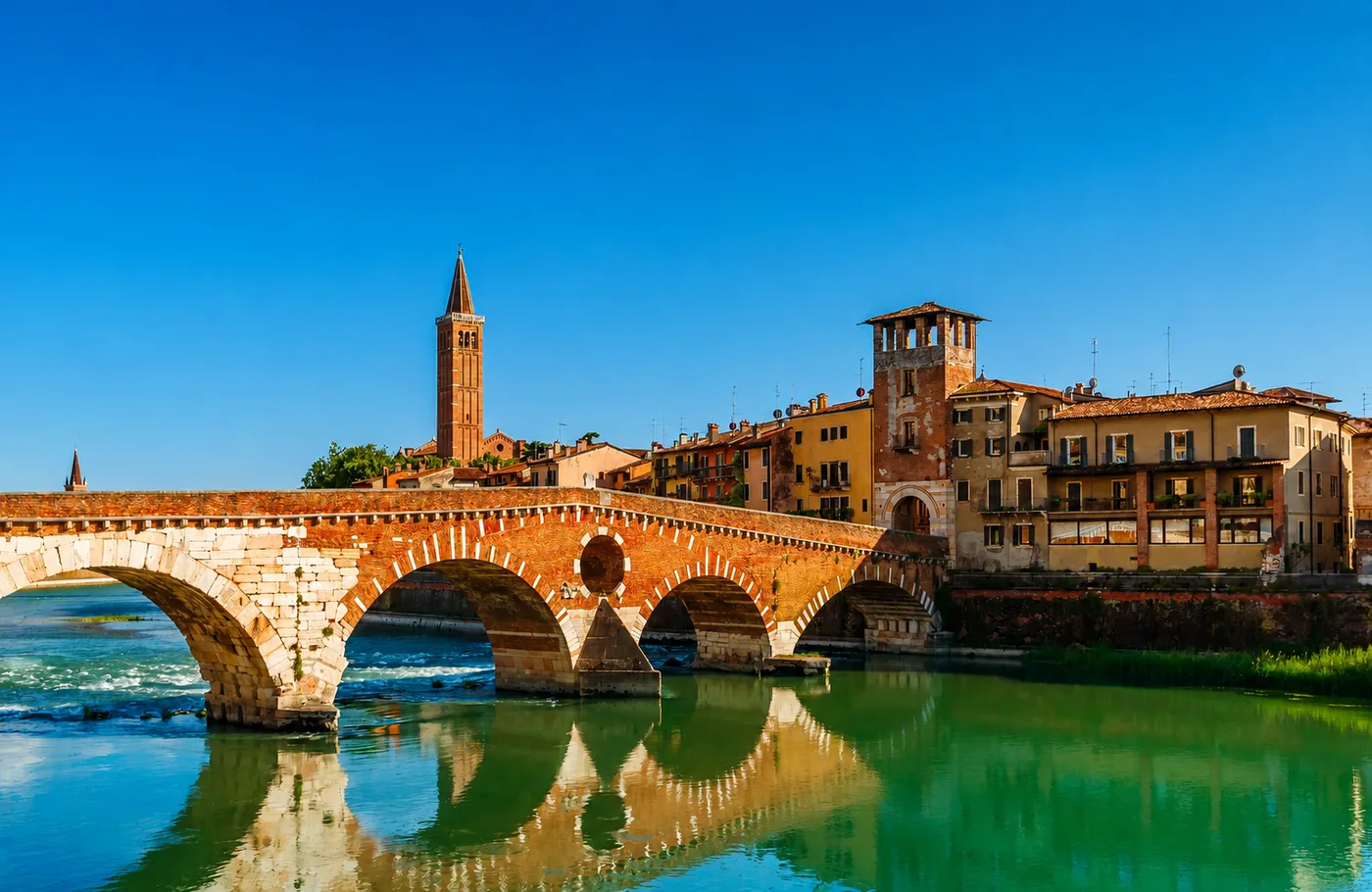
Ponte Pietra
One of the classic Verona views, and one of the best places to understand how the river shapes the city.

Piazza delle Erbe
One of Verona's most atmospheric squares, especially at night when the fountain, facades, and market history give the center its layered city feel.

Evening by the Adige
At night, Verona feels calmer and more atmospheric than many big-name cities, which is part of why it works so well as a base.

Historic center atmosphere
Verona works because the monuments are not isolated. The city keeps giving you connected historic spaces, facades, and piazzas.
Why Verona works so well for wine travel
Verona gives you options. If you want Amarone and cellar visits, you can build a day around Valpolicella. If you want white wines and a calmer landscape, Soave fits. If you want a lighter, lakeside mood, Bardolino and Lugana make sense through the Lake Garda side.
It also works well in practical terms: you can stay in one hotel, enjoy the city's restaurants and evening atmosphere, and then go out for focused wine days instead of packing and moving every night.
Vinitaly belongs in the Verona story
One of the biggest reasons Verona matters in the wine world is Vinitaly, the major international wine and spirits fair held at Veronafiere. That matters here because Verona is not only near great wine regions. It is also one of the main wine cities in Italy.
Vinitaly is usually held in April. The official Vinitaly site currently lists the 2026 edition for April 12-15, 2026, while Vinitaly and the City runs in central Verona on April 10-12, 2026. Even if you are not coming as an industry professional, it helps explain why Verona feels so connected to wine at every level, from major fairs to tastings and city events.
Why so many travelers use Verona as a base
This is the real strength of Verona for this site. A lot of visitors to the region end up in Verona even if wine is only part of the trip, because the city sits in the middle of so many useful directions. It gives you a proper historic center, major monuments, strong restaurant options, and easy access to several of the wine areas that matter most.
In practical terms, Verona is roughly 20 to 25 minutes from parts of Valpolicella such as Fumane, around 30 minutes from Soave, and often around 35 minutes from Bardolino on the Lake Garda side depending on where you start and traffic conditions. That is exactly why it works so well as a base: you can do real wine days without having to sleep in a different place every night.

Simple trip ideas from Verona
| If you want... | Best direction |
|---|---|
| Amarone, Ripasso, and serious red wines | Valpolicella |
| Soave Classico and white-wine hills | Soave |
| Lake Garda mood with easier-drinking wines | Lugana and Bardolino |
| A broader wine-planning overview | Veneto Wine Tours |
Good first approach
If this is your first Veneto wine trip, Verona is the safest place to start. Give the city one proper day for its own history and atmosphere, then use it as a base for one or two wine days. That usually creates a better trip than rushing between too many hotel changes.
One city day, one wine day
If you are short on time, Verona works best when you give the city its own day and then use the next day for Valpolicella or Soave instead of trying to squeeze everything into one rushed schedule.
Move from Verona into wine country
Once you know why Verona works as a base, the next practical step is choosing the right region and wineries around it.