Why Valpolicella matters
Valpolicella sits north of Verona and produces a family of red wines that range from bright and easy-drinking to powerful and age-worthy. Learning the family helps you buy more intelligently.
The main grapes
Corvina and Corvinone are the central grape names to know, with Rondinella also playing an important role. Amarone production rules allow Corvina Veronese and/or Corvinone as the largest part of the blend, with Rondinella and other permitted red grapes in smaller proportions.
In the glass, these grapes can give cherry fruit, spice, perfume, freshness, and structure, depending on vineyard, drying, and winemaking choices.
What is Amarone della Valpolicella?
Amarone della Valpolicella DOCG is a dry red wine made from grapes that are dried before fermentation. The result is usually full-bodied, concentrated, and high in alcohol, but the best examples still feel balanced rather than heavy.
Appassimento explained
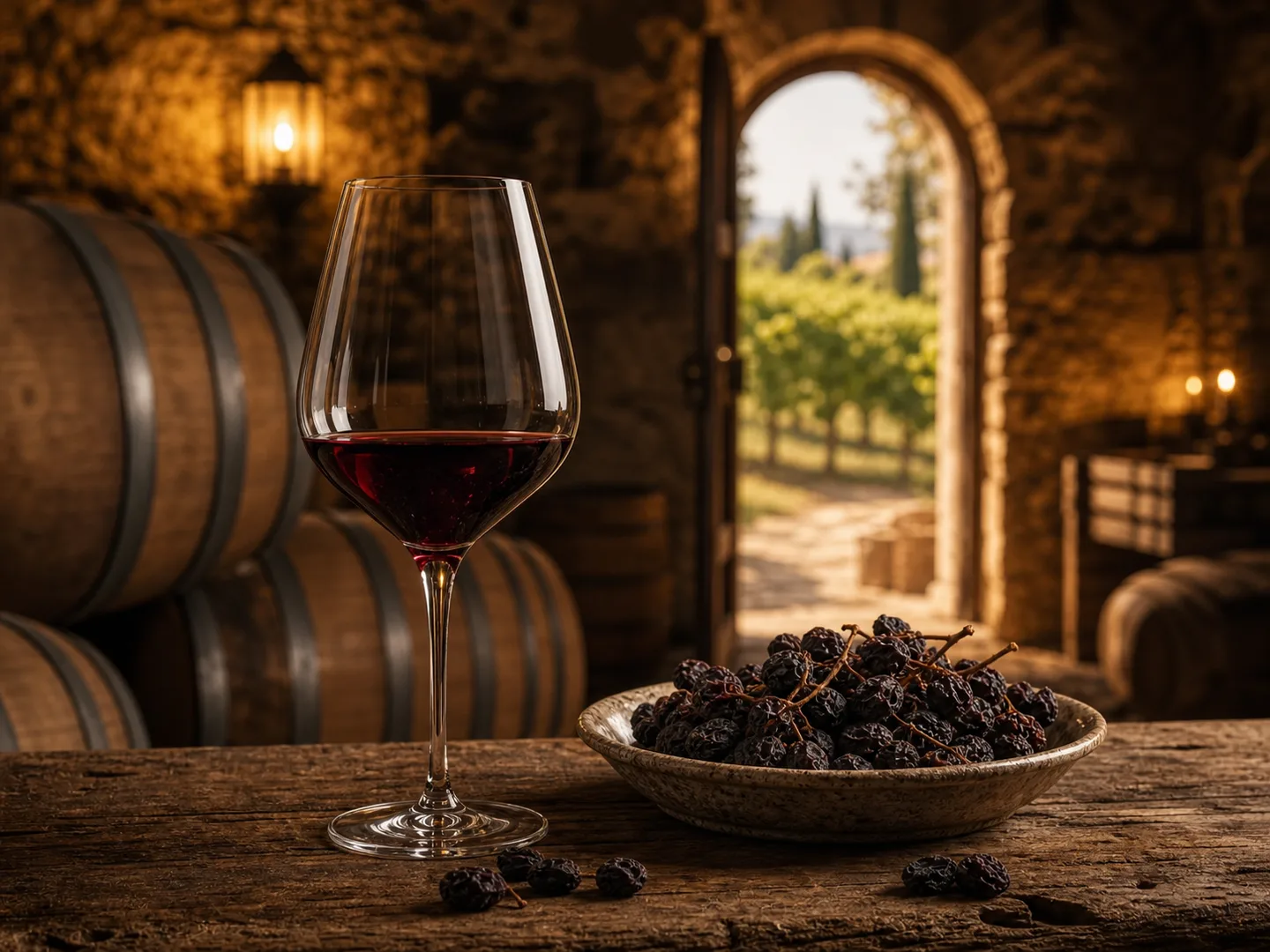
Appassimento means the grapes are dried after harvest, traditionally in drying rooms called fruttai. This concentrates flavor, alcohol potential, texture, and structure. It is central to Amarone and Recioto, and it is one reason these wines taste so different from ordinary fresh-grape reds.
Valpolicella Ripasso
Ripasso is often the smarter bottle for many dinners. It is fuller than basic Valpolicella but usually less intense, expensive, and demanding than Amarone. It can bring dried-cherry richness while still feeling practical at the table.
Recioto and Valpolicella Classico
Recioto della Valpolicella is the sweet red tradition behind Amarone's story. Valpolicella Classico refers to the historic area and is a useful term when planning cellar visits around Verona.
What Amarone tastes like
Common notes include dark cherry, dried fruit, spice, cocoa, tobacco, and richness. Not every bottle tastes the same: producer style, vintage, age, and balance matter.
Food pairings
Amarone can work with braised beef, aged cheese, game, mushroom dishes, risotto, and some dark chocolate pairings. Keep the dish rich enough to meet the wine.
Serving and buying tips
Serve powerful reds slightly below warm room temperature, and consider decanting younger bottles. Vintage and producer matter, but balance matters more than alcohol. For weeknight meals, Ripasso can be better value than Amarone.
A deeper Valpolicella section may be added later as the site grows. For now, this guide keeps the main Amarone, Ripasso, Recioto, and Valpolicella basics in one place.
Amarone FAQ
Is Amarone sweet or dry?
Amarone is dry, although it often smells rich and ripe.
What is appassimento?
It is the drying of grapes before fermentation.
What is the difference between Amarone and Ripasso?
Amarone is bigger and made from dried grapes. Ripasso is usually more approachable and less expensive.
Is Amarone good with food?
Yes, with rich meats, aged cheese, mushrooms, and winter dishes.