Prosecco guide
Prosecco DOC vs DOCG: What Is the Difference?
DOC is broader. DOCG is more specific. That is the simple version, but the useful answer depends on what you are buying the bottle for.
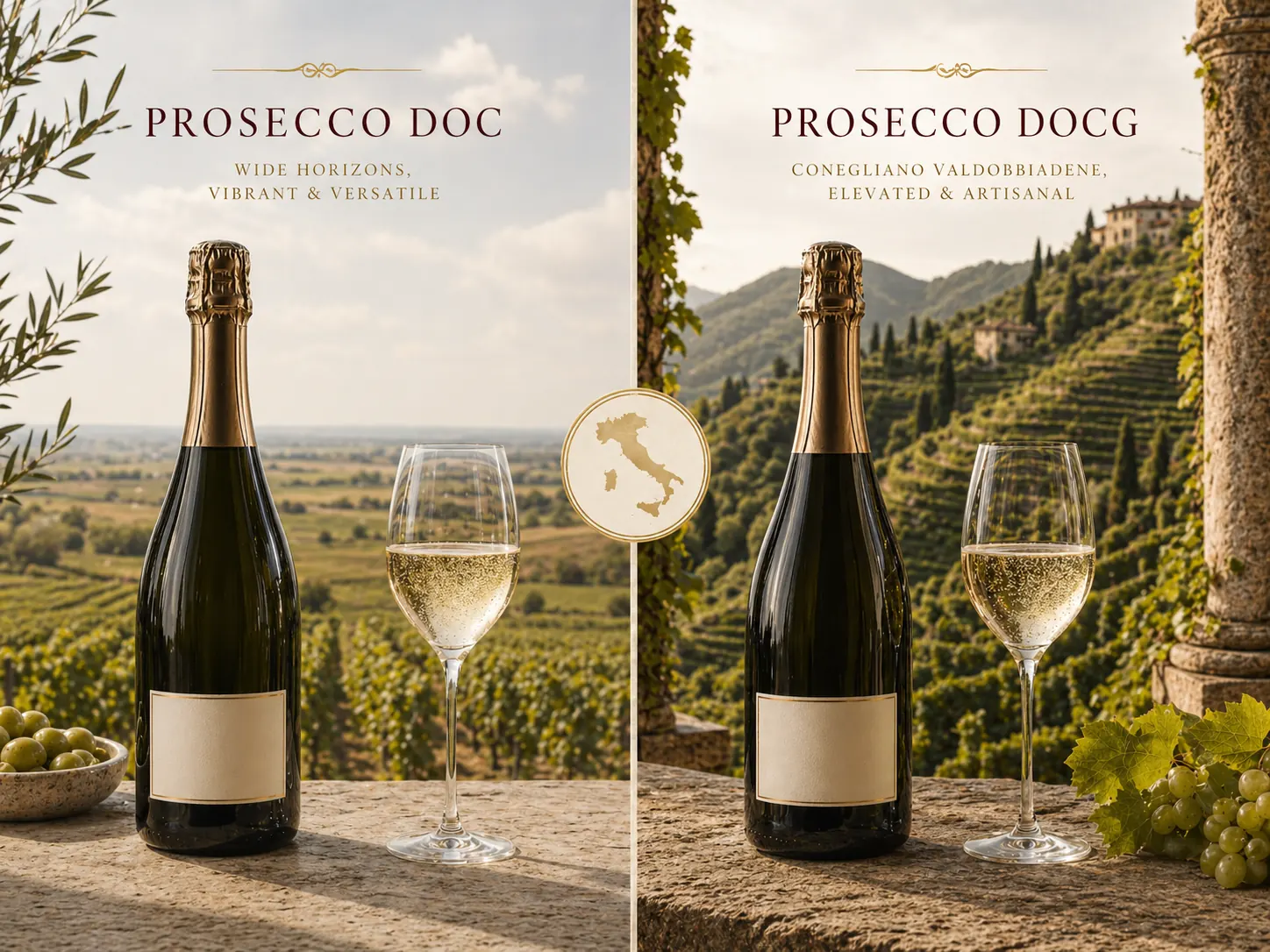
Prosecco is one of the easiest wines in the world to enjoy and one of the easiest to misunderstand. The word on the label can refer to a broad everyday sparkling wine or to a more specific hillside wine from a recognized historic area. Neither category automatically guarantees that you will love the bottle, but the difference helps you shop with more confidence.
The short answer
| Label | What it usually means for the buyer |
|---|---|
| Prosecco DOC | The broader denomination. Often fresh, simple, fruit-driven, and useful for casual drinking, parties, spritzes, and aperitivo. |
| Prosecco Superiore DOCG | A more specific category tied to recognized areas such as Conegliano Valdobbiadene or Asolo. Often the better place to look for more detail and a clearer sense of place. |
DOC is the wide doorway
Prosecco DOC covers a broad northeastern Italian production area. Many bottles are made for freshness, easy fruit, and immediate drinking. That can be exactly what you want if you need a bright aperitivo wine, something for a simple toast, or a bottle that will not dominate the food.
The mistake is assuming that DOC means bad. It does not. It means broad. Within that broad category, producer quality and freshness still matter.
DOCG is more specific
Prosecco Superiore DOCG is more geographically specific. Conegliano Valdobbiadene Prosecco Superiore DOCG is tied to the steep hills between Conegliano and Valdobbiadene in Veneto, where Glera is grown in a landscape that gives the wine stronger regional identity.
If you are buying a bottle to drink on its own, serve with good food, or understand Veneto better, DOCG is often the place to start. It is not about snobbery. It is about choosing a label that tells you more.
Sweetness terms can matter more than DOC vs DOCG
This is where many people get caught. Extra Dry does not mean the driest Prosecco. Brut and Extra Brut taste drier. Dry can taste softer. If you dislike sweetness, buying DOCG will not help if you choose a sweetness level you do not enjoy.
| Term | Practical expectation |
|---|---|
| Extra Brut | Very dry and crisp. |
| Brut | Dry, often the safest choice for people who want less sweetness. |
| Extra Dry | Usually softer and rounder than Brut, despite the name. |
| Dry | Often noticeably softer. Good for some palates, confusing for others. |
When DOC is the right choice
Choose Prosecco DOC when the moment is casual: a spritz, a simple aperitivo, a large gathering, or a relaxed bottle with salty snacks. It can be good value and does not need to carry the whole evening.
When DOCG is worth looking for
Choose Prosecco Superiore DOCG when you want more precision: a bottle for dinner, a gift, a tasting comparison, or a first serious step into Veneto sparkling wine. Look especially for Conegliano Valdobbiadene if you want to understand why the hills matter.
Food pairings
Both DOC and DOCG Prosecco can work well with cicchetti, seafood, fried starters, prosciutto, light pasta, and aperitivo snacks. Drier styles tend to be more flexible at the table. Softer Extra Dry styles can be very pleasant with salty bites.
The practical buying rule
For parties or spritzes, DOC can be enough. For a bottle you want to notice, start with Prosecco Superiore DOCG. For either one, check the sweetness term before you buy.
Read next
Read the full Prosecco guide, see featured Veneto wine styles, or request the Veneto Wine Starter Guide.