Label guide
How to Read a Veneto Wine Label Without Getting Lost
A Veneto wine label can look busy at first, but most bottles are telling you the same basic story: who made it, where it comes from, what style it is, and how serious or specific the wine is trying to be.
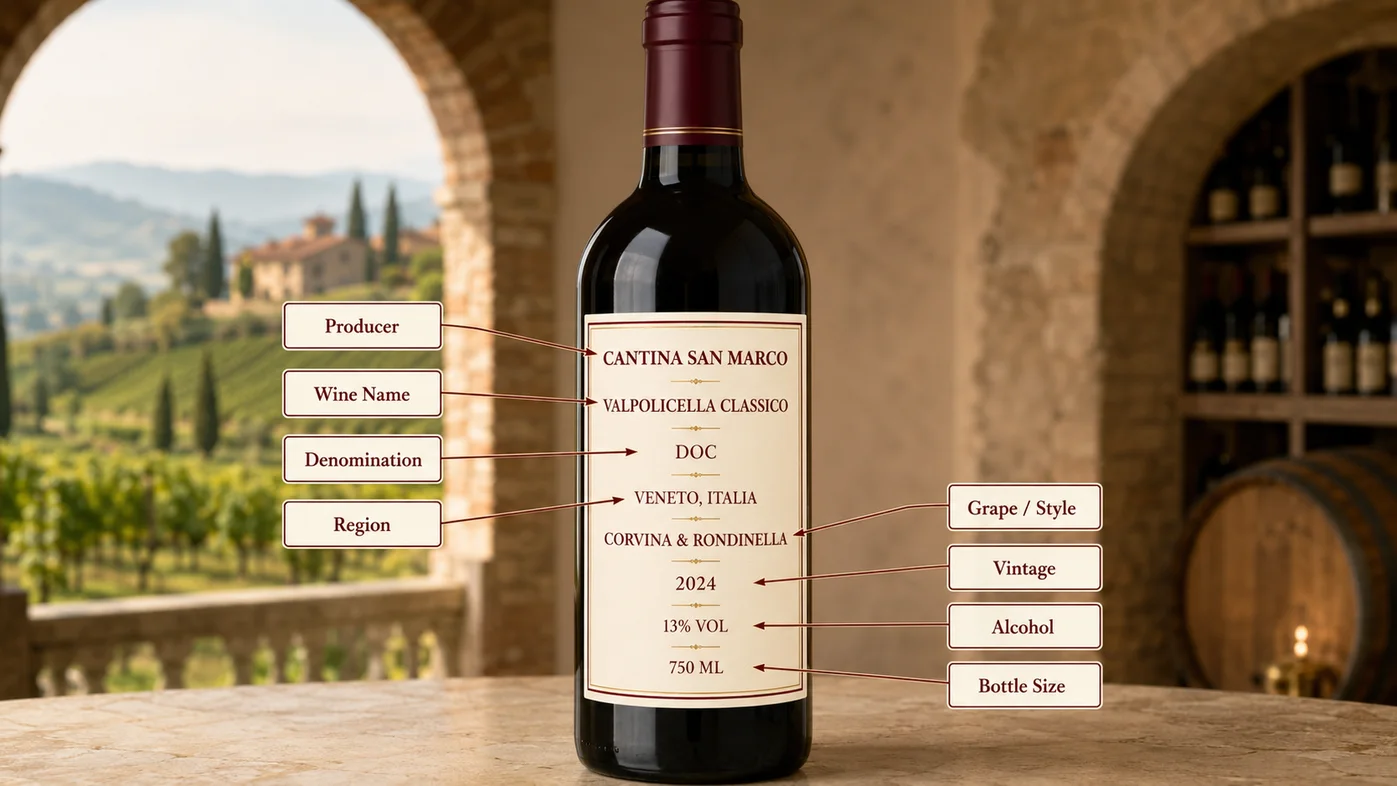
The trick is not to read every word with equal importance. Some words tell you the region. Some tell you the grape. Some tell you the production category. Some are just branding. Once you know which words matter, choosing a bottle becomes much less stressful.
Start with the producer
The producer is usually one of the most important pieces of information on the label. In Veneto, names like a winery, estate, cooperative, or bottler can tell you a lot about the style and reliability of the wine. If you enjoyed a bottle, remember the producer first.
Sometimes the producer name is larger than the wine name. Sometimes it is smaller and tucked at the top or bottom. Either way, it is worth finding.
Find the place or wine name
Many Veneto labels are built around a place name or denomination: Soave, Valpolicella, Amarone della Valpolicella, Bardolino, Lugana, Prosecco, or Conegliano Valdobbiadene Prosecco Superiore.
That name tells you the wine family. If the label says Soave, you are in the world of dry white wine based mainly on Garganega. If it says Amarone della Valpolicella, you are looking at a powerful dry red made from dried grapes. If it says Lugana, expect a white wine from the Lake Garda area.
DOC and DOCG are origin categories
DOC and DOCG are Italian quality and origin categories. In simple terms, they tell you the wine follows rules for a defined place and style.
| Term | What it usually means |
|---|---|
| DOC | A controlled denomination with rules for where and how the wine is made. |
| DOCG | A more specific category with stricter rules and an added guarantee process. |
DOCG does not automatically mean you will like the bottle more. It means the label is tied to a more tightly defined category. Producer quality, freshness, style, and your own taste still matter.
Classico usually points to the historic area
When you see Classico, it usually means the wine comes from the historic heart of the denomination. Soave Classico and Bardolino Classico are good examples.
Classico is not just an old-fashioned word. It can be a useful buying clue because the historic area often has the reputation, soils, hills, or traditions that made the wine known in the first place.
Superiore and Riserva are style clues
Superiore often signals a wine with higher minimum alcohol, more concentration, or stricter production rules depending on the denomination. Riserva usually means longer aging before release.
These words do not always mean the wine is better for every situation. A Riserva may be more structured and serious, but a younger non-Riserva bottle may be fresher and better for a simple dinner.
Grape names are not always obvious
Veneto labels often use place names instead of grape names. Soave is usually based on Garganega. Valpolicella and Amarone are usually based on Corvina, Corvinone, Rondinella, and other local red grapes. Prosecco is made mainly from Glera.
If the grape is not on the front label, that does not mean the bottle is hiding something. Italian labels often expect you to know that the place name already implies the grape family.
Vintage and alcohol tell you practical things
The vintage is the harvest year. For fresh wines like many Prosecco, Soave, Bardolino, and Lugana bottles, recent vintages are often what you want. For structured reds like Amarone, some age can be useful.
Alcohol also gives you a quick style clue. A lighter Valpolicella may sit in a very different place from a rich Amarone. If the alcohol is high, expect more body and warmth in the glass.
For Prosecco, read the sweetness term
Prosecco labels can be confusing because Extra Dry does not mean extra dry. Brut and Extra Brut taste drier. Extra Dry usually tastes softer and rounder.
| Prosecco term | Practical expectation |
|---|---|
| Extra Brut | Very dry, crisp, and direct. |
| Brut | Dry and usually a safe choice if you dislike sweetness. |
| Extra Dry | Softer and slightly rounder, despite the name. |
| Dry | Often noticeably softer and sweeter tasting. |
A simple label-reading order
- Find the producer.
- Find the wine name or place name.
- Check whether it is DOC or DOCG.
- Look for Classico, Superiore, or Riserva.
- Check vintage and alcohol.
- For sparkling wine, check the sweetness term.
The practical buying rule
If you are choosing quickly, do not try to decode the entire label. Ask three questions: What style is this wine? Is it from a specific place? Does the bottle fit the meal or moment?
That is enough to avoid most mistakes. You can learn the smaller details later, glass by glass.
Read next
Explore Veneto wine profiles, connect labels to regions, or request the Veneto Wine Starter Guide.