Beginner guide
Best Veneto Wines for Beginners
Start with styles that teach you something useful without making the region feel complicated. Veneto has sparkling wine, fresh whites, easy reds, serious reds, lake wines, and hillside specialties.
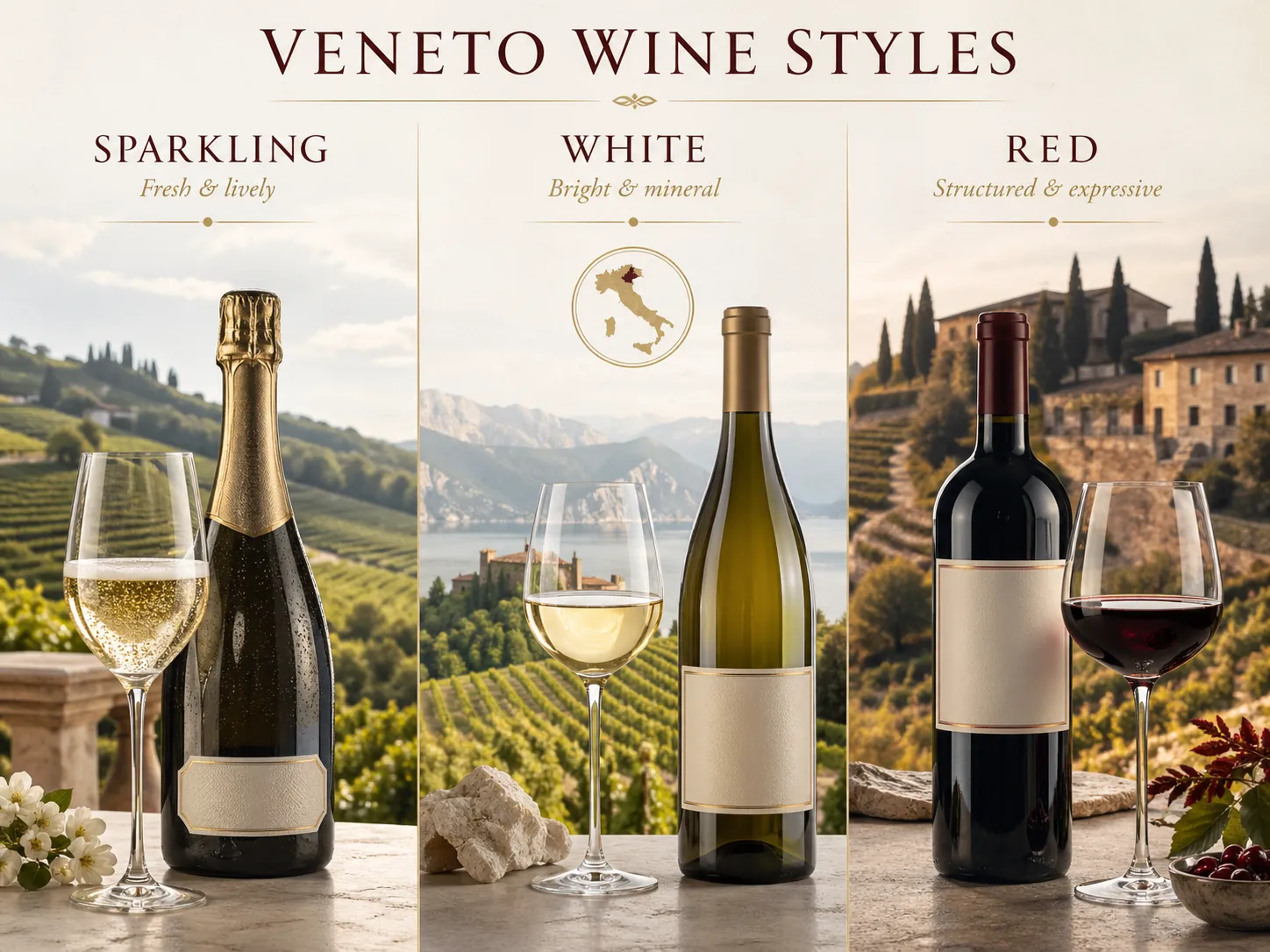
If you are new to Veneto wine, do not start by trying to memorize every denomination. Start with the bottles that explain the region. One sparkling, one white, one easy red, one deeper red, and one special bottle will teach you more than a shelf full of random labels.
The beginner roadmap
| First step | Wine style | Why it helps |
|---|---|---|
| First sparkling | Prosecco Superiore DOCG | Shows the more specific hillside side of Prosecco. |
| First white | Soave Classico | Introduces Garganega and Veneto's serious white-wine side. |
| First easy red | Valpolicella | Fresh, food-friendly, and not too heavy. |
| First deeper red | Valpolicella Ripasso | Richer than basic Valpolicella but usually easier than Amarone. |
| First special bottle | Amarone della Valpolicella | Shows the power and tradition of appassimento reds. |
First sparkling: Prosecco Superiore DOCG
Prosecco is the first Veneto wine many people know, but the best beginner move is to look beyond the most generic bottle. Conegliano Valdobbiadene Prosecco Superiore DOCG gives you a clearer sense of the Prosecco hills and why origin matters.
Choose Brut or Extra Brut if you want a drier style. Choose Extra Dry if you like a softer, rounder aperitivo feel.
First white: Soave Classico
Soave Classico is the white wine that can change how people think about Veneto. Made mainly from Garganega, good Soave can be citrusy, almond-toned, mineral, fresh, and excellent with food.
It is a smart first white because it is not just refreshing. It also teaches you that Veneto has serious dry white wines, not only sparkling and red.
First easy red: Valpolicella
Basic Valpolicella is useful because it is not trying to be Amarone. It can be fresh, cherry-toned, moderate in body, and flexible with food. Try it with pizza, pasta, charcuterie, roast chicken, or simple grilled dishes.
First deeper red: Valpolicella Ripasso
Ripasso is a good second red because it adds depth without becoming a special-occasion wine. It often brings more texture, spice, and richness than basic Valpolicella while staying easier to use at dinner than Amarone.
First special bottle: Amarone della Valpolicella
Amarone is the bottle to open when the meal can handle it. It is dry, powerful, concentrated, and often warming, with flavors that can include dark cherry, dried fruit, spice, cocoa, and tobacco.
Do not make Amarone your everyday starting point. It is easier to appreciate when you already understand Valpolicella and Ripasso.
Two useful extras: Lugana and Bardolino
Lugana is a fresh white wine from the Lake Garda area, associated with Turbiana. It is a good choice for seafood, lake fish, and summer lunches. Bardolino, also around Lake Garda, is a lighter red style that can be excellent with casual food and warmer weather.
What to avoid as a beginner
- Do not assume all Prosecco tastes the same.
- Do not start with the most expensive Amarone before you know what you like.
- Do not ignore Soave because of old cheap-wine memories.
- Do not choose only by bottle weight, label design, or vague luxury language.
The simple first case
If you wanted a small starter selection, choose one Prosecco Superiore DOCG, one Soave Classico, one Valpolicella, one Valpolicella Ripasso, and one Amarone. Add Lugana or Bardolino if you want to understand Lake Garda wines.
Read next
Request the starter guide, explore Veneto regions, or see featured wine styles.